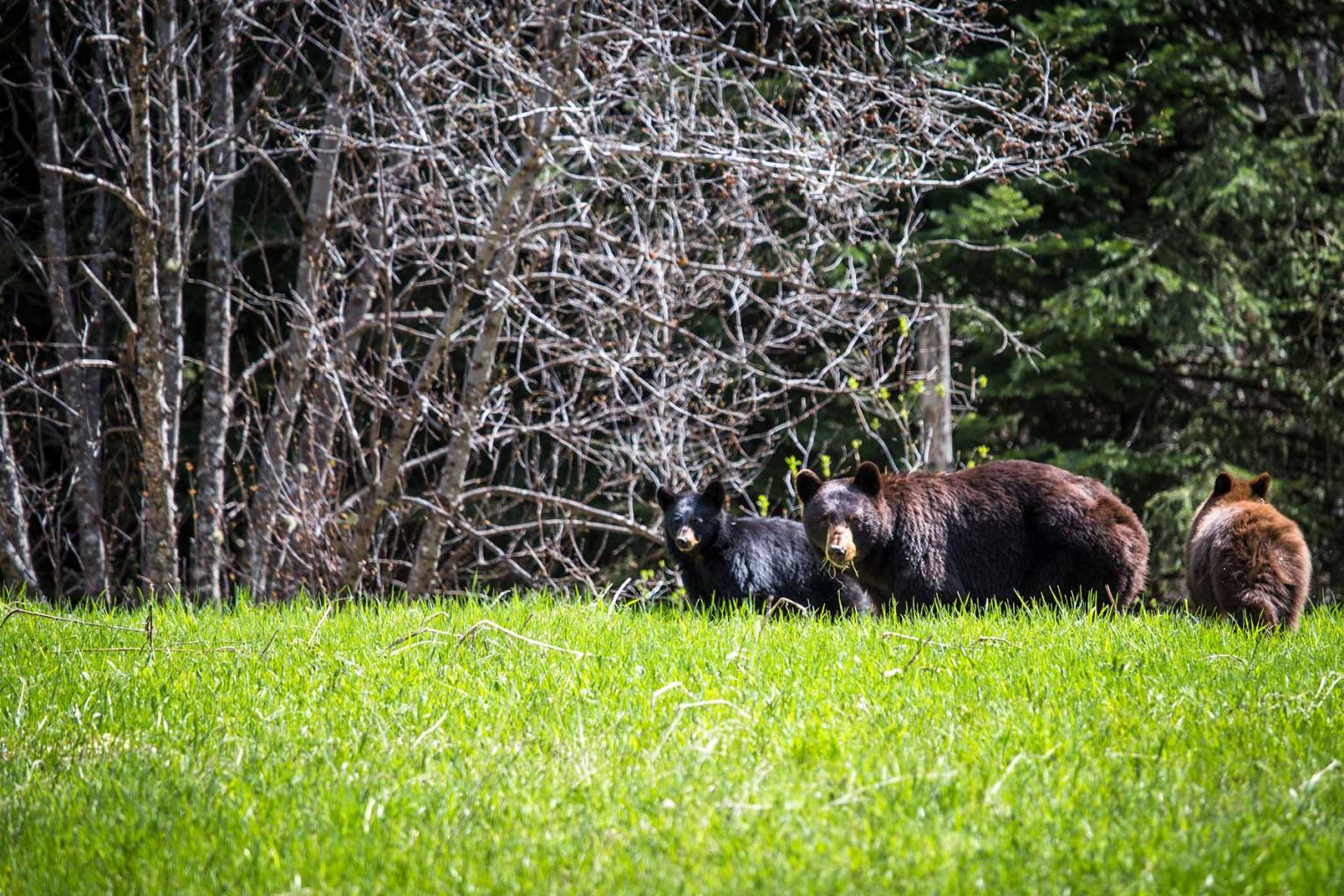
Three bears in the grass

The mountains of the area abound with animals free roaming in their natural habitat. While in resort or on the mountain you may encounter a black bear during your stay. If you do see a bear always keep your distance, many wildlife professionals recommend remaining a minimum of 100 metres away. 

When on a trail

Pack out what you pack in: Do not throw any food or waste products out. Garbage and recycling receptacles are conveniently located at the top and bottom of the Sunburst chairlift and throughout the village.

Make noise: Call, sing, clap or talk loudly especially near streams and in areas of low visibility.

Be alert: Watch for bears or their scat and tracks, any strange smells or disturbed vegetation. Be aware of wind direction and speed. Extra caution is warranted when the wind is facing you.

Stay together: Hike and bike in groups and don’t let children wander. Larger groups (4 or more) are less likely to have a negative bear encounter.

Watch your pets: Keep your dog on a leash at all times. Dogs can provoke defensive bear behaviour.

Use officially marked trails: Travel during daylight hours. Bears are most active at dawn and dusk.

If you encounter a bear

Remain calm. Think ahead. Your actions are the best defense against a bear attack.

Do not run: Bears can easily outrun humans. By running you may trigger an attack. Pick up small children and when possible stay in a group. Back away slowly and speak softly.

Give the bear space: Back away slowly and talk in a soft voice. Do not approach the bear or make eye contact.

Leave the area or make a wide detour: If you cannot leave, wait until the bear moves out of the way and ensure that the bear has an escape route.

If the bear rears up on its hind legs: It is curious and trying to see you or catch your scent better. It is not a sign of aggression. Back away slowly and talk softly.

Watch for aggressive behaviours: A bear may display aggression by swinging its head from side to side; making vocalizations such as huffs, snorts, whoops, or moans; displaying teeth or claws; jaw popping; swatting at the ground; staring with eye contact; panting; or laying its ears back. These behaviours usually indicate that the bear is stressed, acting defensively, and asking for more space. Attacks rarely follow, but this is a warning to leave the area.

For more information visit Wild Safe BC.

Please report all bear sightings to Sun Peaks Mountain Patrol at 250.578.5521.

Help Keep Bears Safe in Sun Peaks

You can help by reporting black bear sightings in and around Sun Peaks. Your reports help track bear activity and guide efforts to protect both bears and people.

Report a Bear Sighting

Operations Update: Cougar sighting in the Controlled Recreation Area

Posted June 15, 2026

A juvenile cougar has recently been observed in the Mountain Operations area, Slopeside Annex and adjacent ski runs. As a young animal, it is still learning to establish its territory and hunting habits. At this time, it is not exhibiting unusual or aggressive behaviour toward people.

As with all wildlife encounters, staff and visitors are encouraged to remain aware of their surroundings and take appropriate precautions to reduce the potential for negative interactions.

Please notify Patrol/Dispatch of any sightings at 250.578.5521.

Note: Juvenile cougars can sometimes appear more erratic or curious than adult animals because they are still developing hunting skills and learning to navigate their environment. This behaviour alone does not necessarily indicate a problem animal, but it does warrant increased awareness and caution.

Personal safety

  • Be alert when walking, hiking, biking or working outdoors, particularly during dawn, dusk and nighttime hours.
  • Avoid wearing headphones at high volume when travelling through areas with limited visibility.
  • Keep campsites clean and free of food attractants. Store food, garbage, and scented items securely.
  • Travel in groups whenever possible.

If you encounter a cougar:

  • Remain calm and do not run.
  • Maintain eye contact and face the animal.
  • Make yourself appear larger by raising your arms or opening your jacket.
  • Speak firmly and back away slowly.
  • If the cougar approaches, be prepared to defend yourself using sticks, rocks or other available objects.
  • Report the sighting to local authorities if the animal displays bold or concerning behaviour.

Pets and domestic animals

  • Keep dogs on a leash and under control at all times.
  • Avoid walking dogs during dawn, dusk or after dark when cougar activity is more common.
  • Do not allow pets to roam freely outdoors, especially overnight.
  • Pick up small pets when moving through areas with dense vegetation or limited sightlines.
  • Be particularly cautious if a leashed dog becomes agitated, fixated or reluctant to proceed, as animals may detect wildlife before people do.

Reporting wildlife

Most cougar sightings are simply observations of a naturally occurring predator moving through its habitat. However, sightings involving a cougar that:

  • shows no fear of people;
  • follows people or pets;
  • lingers around homes or occupied areas; or
  • displays aggressive behaviour

should be reported to local conservation or wildlife authorities immediately.

By remaining aware and taking simple precautions, we can help ensure the safety of people, pets and wildlife while minimizing unnecessary conflicts.

Please notify Patrol/Dispatch of any sightings at 250.578.5521.

To report potentially dangerous or aggressive wildlife in B.C., call the RAPP hotline at 1.877.952.7277. This 24/7 service connects you directly to the BC Conservation Officer Service to report incidents that may threaten public safety.

Top